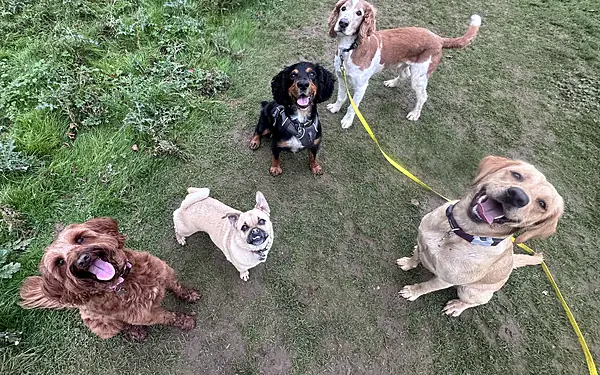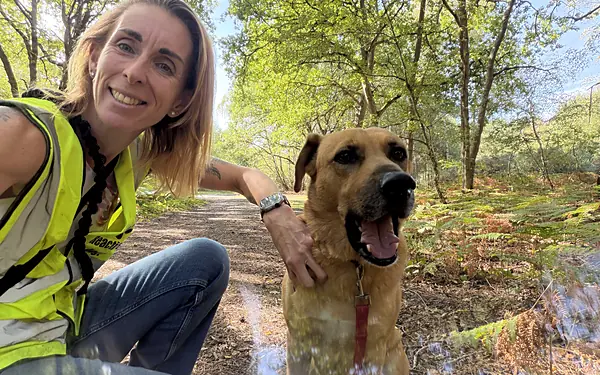
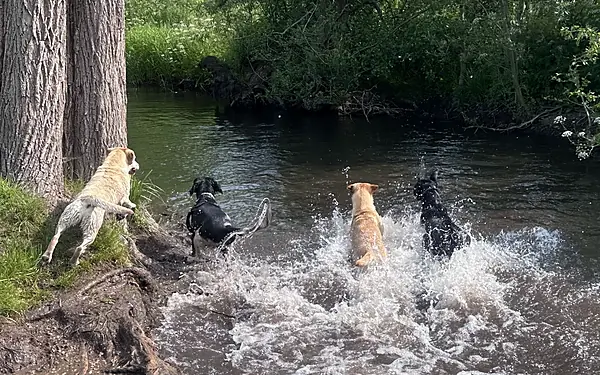
Group walks are the heart of what Doggy Paws on Patrol does: an hour in the countryside with a small group of dogs who get on. For the right dog they are brilliant. They come home tired, settled and happy, and they get social time they might not get at home.
Signs your dog will enjoy group walks
- They are friendly or curious with other dogs, and play nicely
- They recover quickly if another dog gets a bit bouncy
- They have plenty of energy and love being outdoors
- They travel calmly, or at least cope with a short car journey
- They are happy to be handled by someone other than you
Dogs that may need a different approach
None of these rule a dog out on their own, but they are worth talking through before the first walk:
- Reactive or anxious dogs. Some dogs find other dogs stressful. They may still do well in a very small, calm group, or may be happier walked on their own.
- Dogs who guard toys or food. This matters in a group, so let your walker know.
- Unreliable recall. Not a problem. Dogs who cannot be trusted off lead stay on a lead or long line and still enjoy the walk.
- Very young puppies. Pups need their vaccinations and a gentle start. Shorter, calmer outings come first.
- Older dogs or dogs with health issues. They may need a slower group, a shorter walk, or a visit instead. One owner’s elderly pug, Ruby, who could not go far because of her hips, enjoyed playtime in the garden with Emma instead.
How Emma matches dogs to a group
Groups are small, never more than four dogs per handler, and they are put together on purpose. Emma looks at size, age, energy, confidence and play style, so a bouncy young Labrador is not paired with a nervous older dog who would rather potter.
If a dog would be happier in a different group, Emma moves them. If they need time to settle, she may walk them on their own first. Owners often mention this in their reviews: one said Emma was “really good in adapting Oscar to different dogs & groups and managing his requirements”.
What helps your dog settle in
- Be honest on the registration form about triggers, fears, bite history and recall. It keeps everyone safe.
- Make sure their collar or harness fits well and their lead is in good condition.
- Keep vaccinations and flea, tick and worm treatment up to date.
- Give it a few weeks. Most dogs go from unsure to excited at the sight of the van surprisingly quickly.
Not sure about your dog? That is exactly what the meet and greet is for. Get in touch and Emma will give you an honest view.
Quick answers
Can reactive dogs go on group walks?
Sometimes. It depends on the dog and the group. Tell Emma about any triggers and she will be honest about whether a group walk is right, or whether your dog would be happier walked on their own.
How many dogs are in a Doggy Paws on Patrol group?
Never more than four dogs per handler.
Does my dog have to go off lead?
No. Dogs only go off lead with your written permission and when Emma judges it safe. Dogs on lead still get a full, enjoyable walk.