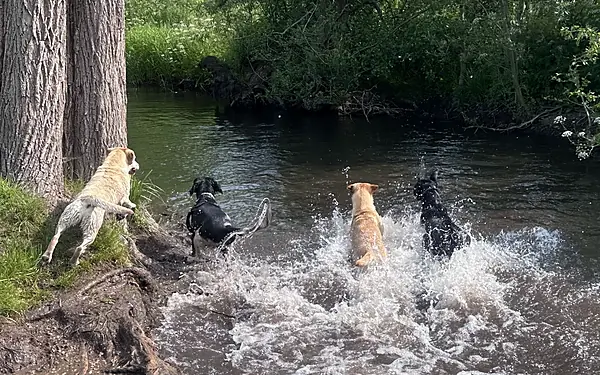
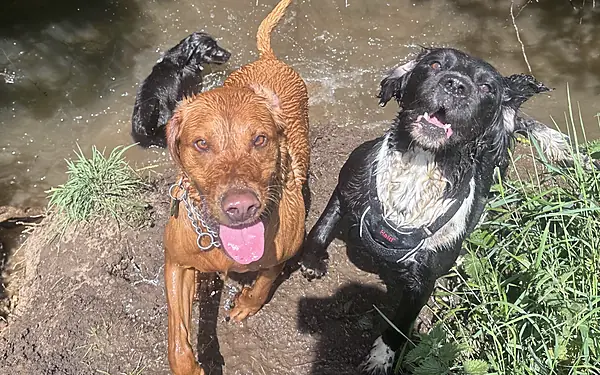
Around Fleet, winter means wet fields, flooded paths, short days and a lot of towels. Walks still go ahead rain or shine with Doggy Paws on Patrol, and most dogs love a muddy hour out. A bit of care before and after makes the season easier for everyone.
After a muddy walk
- Rinse mud off legs, paws and tummy with lukewarm water rather than letting it dry on
- Dry them properly, especially between the toes and in the armpits
- Check paws for cuts, splits or anything stuck between the pads
- Keep a towel by the door on walk days. If Emma collects your dog, tell her where it lives
Coat care in winter
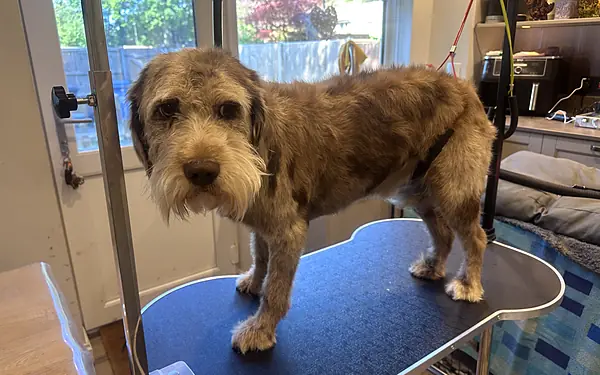
Wet coats tangle faster, and mats hold moisture against the skin. Curly and long-coated dogs in particular benefit from brushing after they have dried off, and from a regular groom through the winter. If your dog spends a lot of time in mud, a slightly shorter trim can make life much easier. Our guide on how often to groom your dog has more detail by coat type.
Be aware of Alabama rot
Alabama rot (CRGV) is rare but serious. Cases are most often seen between November and May, and have been linked to muddy, woodland walks, although the cause is still unknown. Washing mud off after walks is a sensible precaution.
Check your dog’s legs, paws and face for unexplained sores, redness or swelling, and watch for lethargy, vomiting or a change in appetite or drinking. If you are worried, call your vet straight away. Early treatment matters.
Dark mornings and evenings
- A light-up collar or clip-on light helps you see your dog in the field, and helps drivers see you both on the road
- Wear something reflective or hi-vis yourself on lanes without pavements
- Keep dogs on lead near roads when visibility is poor
If you work shifts or leave home before it is light, Emma offers early morning walks, so your dog is exercised and settled before you go.
Cold, ice and grit
- Older, thin-coated and small dogs may appreciate a coat on cold, wet days
- Wipe paws after walking on gritted pavements, as salt and grit can irritate pads
- Walks may be changed if there is ice, flooding or storm damage that makes a route unsafe
Antifreeze and festive hazards
Antifreeze is highly toxic to dogs, so mop up any spills and keep it well out of reach. Over Christmas, keep chocolate, grapes, raisins, mince pies and Christmas pudding away from curious noses.
Planning a groom before Christmas? Get in touch with Emma early to find a date that suits.
Quick answers
Do dog walks go ahead in bad weather?
With Doggy Paws on Patrol, yes, rain or shine. Plans only change for conditions that are unsafe, such as storms, ice or flooding.
When is Alabama rot most common?
Cases are most often seen between November and May. Washing mud off after walks and checking legs and paws for sores is a sensible precaution. Contact your vet if you are worried.
Do you offer early morning dog walks?
Yes. Emma offers early morning walks for owners who work shifts or leave home early.
Sources: Alabama Rot Research Fund advice, as reported by inkl